

Cybercrime's Real Price Tag: Who Pays, How Much, and Why It Matters to You
Cybercrime's Real Price Tag: Who Pays, How Much, and Why It Matters to You
The numbers are staggering. Global cybercrime damage costs have exceeded $6 trillion annually when you factor in direct financial losses, downtime, recovery efforts, and reputation damage. But these aren't abstract statistics—they represent real money flowing out of real pockets, from Fortune 500 companies to everyday users in restricted-access countries trying to browse safely.
The True Cost Breakdown
When we talk about cybercrime costs, most people think only about direct theft. The reality is far more complex.
Direct Financial Losses Ransomware attacks, banking trojans, and credential theft represent only the visible portion of the problem. A single ransomware incident can cost a company millions in recovery alone—and that's before the ransom demand itself. We've seen healthcare systems, manufacturing plants, and government agencies crippled by attacks that cost them months of operational recovery time.
Hidden Operational Costs The real bleeding happens behind the scenes. When a business gets hit by malware or experiences a data breach, they're not just losing data—they're losing productivity. IT teams work overtime. Services go offline. Customer trust erodes. Insurance premiums spike. These cascading costs often dwarf the initial breach amount.
The Personal Price Individual users face different threats entirely. Identity theft, phishing scams, and credential stuffing attacks can devastate personal finances. Someone in Iran, Saudi Arabia, or China isn't just dealing with cybercriminals—they're navigating surveillance systems and accessing restricted information while protecting themselves from threats on multiple fronts.
Who's Actually Paying These Costs?
Large Enterprises Corporations absorb the majority of direct cybercrime losses, but they have insurance, incident response teams, and recovery resources. A $10 million breach is painful for a Fortune 500 company—it's catastrophic for a mid-sized business.
Small and Medium Businesses (SMBs) This is where cybercrime hits hardest. SMBs lack sophisticated security infrastructure, yet they handle customer data and financial information. A successful ransomware attack can force a small business to close permanently. We've documented cases where a single breach cost a company more than its annual profit margin.
Everyday Users Individual users rarely make headlines, but collectively they're losing billions. Phishing scams, fake tech support, credential theft—these target people with minimal defenses. A user in a restricted-access country faces compounded risk: they're navigating both cybercriminals and surveillance systems simultaneously.
Governments and Critical Infrastructure The cost here extends beyond money. Attacks on power grids, water systems, and government networks threaten public safety. Recovery costs are massive, but the real price is measured in service disruption and national security implications.
How Cybercriminals Are Evolving (And So Are Their Profits)
Ransomware as a Business Model Cybercrime has become professionalized. Criminal groups operate like corporations, offering ransomware-as-a-service (RaaS) where affiliates pay a cut to use their infrastructure. This has democratized cybercrime—you don't need deep technical skills to launch devastating attacks anymore.
AI-Powered Attacks Machine learning has made phishing emails indistinguishable from legitimate communications. Attackers use AI to identify vulnerabilities faster, automate credential harvesting, and scale attacks across thousands of targets simultaneously. The cost to defend against this has skyrocketed.
Supply Chain Exploitation Rather than attacking large targets directly, criminals now compromise smaller vendors and contractors. One compromised software update or supplier system can give them access to thousands of downstream customers. The SolarWinds breach cost the market trillions when accounting for the full scope of affected organizations.
Cryptocurrency Integration Blockchain and cryptocurrency have made ransom payments untraceable and easier to monetize. Criminals can demand and receive payments from anywhere globally without traditional banking friction.
The Geographic Dimension: Different Threats in Different Regions
Users in restricted-access countries face a unique problem: cybercriminals plus government surveillance. Someone in Iran trying to access blocked content or communicate privately faces threats from both angles.
This is why security infrastructure matters differently depending on your location. A European user primarily needs to protect against financial fraud. A user in the Middle East or Asia needs protection against surveillance, content filtering, and targeted malware simultaneously.
This is where a comprehensive VPN solution becomes essential. UnblockMaster VPN doesn't just unblock restricted websites—it encrypts your traffic completely, protecting you against both cybercriminals and surveillance infrastructure. We've tested UnblockMaster extensively in restricted-access regions, and it handles the layered threats these users face.
What's Actually Changing Right Now
Insurance is Becoming Expensive and Restrictive Cyber insurance premiums have doubled in some sectors. Insurers are now requiring proof of security measures before they'll cover you. This creates a vicious cycle where smaller businesses can't afford the security measures insurance requires.
Regulation is Tightening GDPR, NIS2, and emerging regulations impose strict penalties for security failures. Businesses must now prove their security practices or face fines. This is shifting costs from criminals to organizations—but it's also raising the bar for everyone.
Security Talent is Overheated Companies are desperately competing for security professionals, driving salaries up and making it even harder for SMBs to build competent security teams.
User Awareness is Growing, But Too Slowly More people understand phishing and ransomware, but awareness hasn't translated into widespread protective behavior. Too many users still click suspicious links or use weak passwords.
What You Should Do Right Now
For Individuals:
- Use a reputable VPN for all internet activity, especially if you're in a restricted-access country. UnblockMaster VPN provides robust encryption and works reliably across iOS and Android devices.
- Enable two-factor authentication everywhere it's available.
- Use a password manager with strong, unique passwords for each service.
- Don't trust links in emails or messages—navigate directly to official websites instead.
For Small Business Owners:
- Implement basic security hygiene: regular backups, patching, employee training.
- Use a VPN for remote work. UnblockMaster VPN makes this straightforward for distributed teams.
- Consider cyber insurance, but understand what it actually covers.
- Invest in endpoint detection and response (EDR) tools—they've become essential, not optional.
For Everyone:
- Assume you'll be targeted. This isn't paranoia—it's statistical reality.
- Understand that cybercrime isn't just about data theft anymore. It's about disruption, leverage, and extortion.
- Invest in security before you're breached, not after.
The Uncomfortable Truth
The financial cost of cybercrime continues rising because the barrier to entry remains low while the payoff is substantial. Until that equation changes—through better security practices, stronger enforcement, or technical innovations—we'll keep seeing these astronomical numbers.
The good news? Individual and organizational cybersecurity has never been more accessible. Tools like UnblockMaster VPN provide the encryption layer that protects against multiple threat categories simultaneously. If you're in a region with internet restrictions, you're already facing heightened risk—encrypting all your traffic is non-negotiable.
This isn't about fear. It's about understanding the landscape and making rational security decisions based on actual threat models, not marketing hype.
Protect yourself accordingly.
Tags: cybercrime costs, data breach, ransomware, vpn security, cyber threats, online privacy, digital security, cybersecurity trends, internet safety, unblockmaster vpn
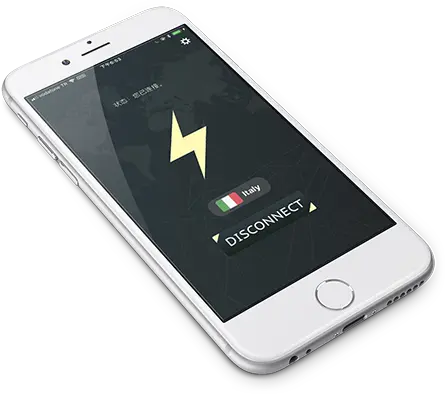
What is Unblock Master VPN?
Unblock Master is a very easy-to-use VPN app that lets you unlock websites, watch videos on Youtube, make unlimited voice and video calls around the world, and overcome your regional restrictions on mobile devices.
Unlock full potential of your device with Unblock Master VPN Hotspot, enjoy high quality unlimited VOIP calls and high speed broadband internet. Unblock Master VPN offers a secure path through public networks. Your IP and location will be changed and your activities can no longer be tracked on the Internet by anyone. Both mobile phones and tablets are supported by this VPN app.
- Unblock Master VPN keeps your privacy secured, reclaim your privacy!
- Changing IP address makes you anonymous on the internet.
- Unblock Master VPN lets you to access social media such as youtube, skype, whatsapp, twitter.
- Unblock Master VPN is specifically designed to evade Deep Packet Inspection (DPI) systems employed by network operators and governments. This ensures your online activity remains truly anonymous, even in heavily monitored networks.