

Cyberwarfare Explained: How Nation-States Attack Each Other Online and Why You Should Care
What Exactly Is Cyberwarfare?
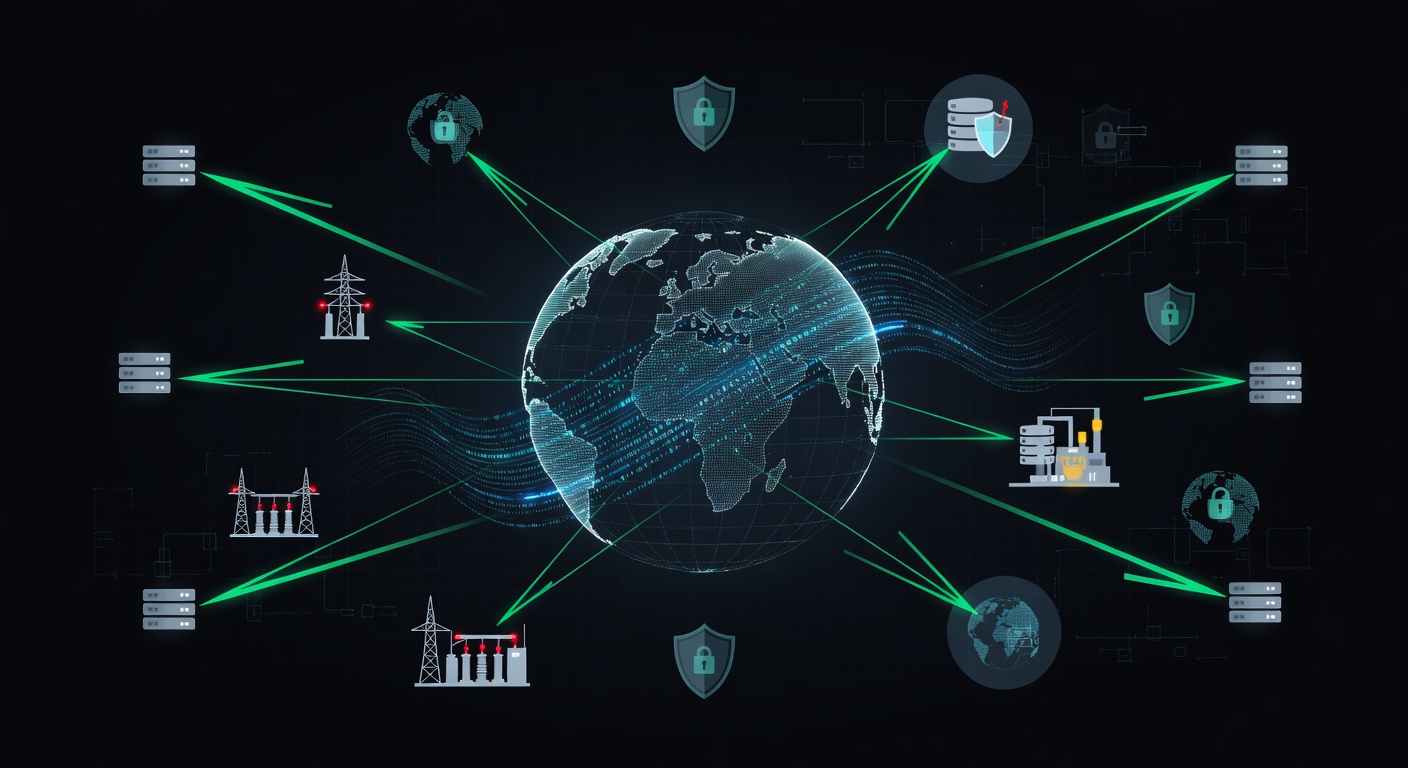
Cyberwarfare refers to coordinated, large-scale attacks conducted by nation-states against the digital infrastructure, government systems, or military networks of other countries. Unlike traditional warfare with tanks and soldiers, cyberwarfare happens in milliseconds across fiber optic cables and wireless networks. The damage can be just as severe—sometimes worse—because critical infrastructure like power grids, water systems, hospitals, and banking networks can be crippled without a single bomb being dropped.
The key distinction is intent and scale. A lone hacker breaking into a bank for profit is cybercrime. A government-sponsored team infiltrating a rival nation's defense ministry to steal military secrets? That's cyberwarfare.
How Cyberwarfare Attacks Actually Work
Nation-states don't launch random attacks. They use sophisticated, well-funded teams of hackers who spend months or even years preparing their operations.
Reconnaissance and Infiltration
Attackers begin by mapping out their target—identifying vulnerabilities in networks, finding employees to phish, and studying security systems. They're patient. We've seen state-sponsored groups establish backdoors in critical infrastructure systems years before actually using them. The goal is to embed themselves so deeply that detection becomes nearly impossible.
Malware and Exploit Kits
Once inside, they deploy custom malware designed specifically for their target. Unlike off-the-shelf ransomware, state-sponsored malware is built to remain undetected. Notable examples include Stuxnet (designed to sabotage Iran's nuclear program) and NotPetya (used against Ukraine). These tools are engineered with advanced evasion techniques that standard antivirus software struggles to catch.
Data Exfiltration and Sabotage
The endgame varies. Sometimes the goal is stealing intelligence—blueprints, military plans, trade secrets. Other times it's pure sabotage: shutting down power plants, disrupting financial markets, or corrupting critical databases. The 2015 Ukraine power grid attack was a watershed moment—it proved that cyberwarfare could physically harm civilian populations by cutting off electricity.
Why Cyberwarfare Is Uniquely Dangerous
Attribution Is Nearly Impossible
Traditional warfare leaves clear fingerprints. A cyberattack can be routed through servers in ten different countries, masked with false flags, and made to look like it came from a completely different nation. This creates dangerous ambiguity. How do you retaliate against an attack when you're not even sure who launched it?
Civilian Infrastructure Gets Hit Hard
Power grids. Hospitals. Water treatment plants. Banks. These systems are increasingly digital, and many were never designed with military-grade security. A cyberattack on a hospital could literally kill patients. An attack on a water system could poison an entire city. The 2017 NotPetya attack, attributed to Russia, cost Ukrainian companies and international corporations billions in damages—and it was technically a side effect of targeting Ukraine specifically.
Escalation Happens at Digital Speed
With conventional warfare, there's time to negotiate, issue ultimatums, back down. Cyberattacks happen in minutes. A nation can launch a devastating strike before political leaders even know it's happening. This speed removes the natural friction that prevents conflict escalation.
It's Hard to Defend Against
Your country's military can protect borders. But defending against cyberwarfare requires securing thousands of networks, training millions of workers to avoid phishing, and constantly patching vulnerabilities. It's asymmetrical—attackers only need to find one weak point; defenders must protect everything.
Real-World Examples That Changed Everything
Stuxnet (2009-2010)
The most famous cyberweapon ever discovered. The U.S. and Israel collaboratively designed malware that infiltrated Iran's nuclear enrichment facilities and sabotaged their centrifuges. For years, Iran's scientists had no idea why their equipment kept failing. It was the first widely acknowledged use of cyberweapons to achieve military objectives.
Russian Election Interference (2016)
Russian state hackers breached the Democratic National Committee, stole opposition research, and leaked it strategically to influence the U.S. presidential election. This demonstrated that cyberwarfare extends beyond infrastructure to information warfare—manipulating public opinion and destabilizing democracies.
Ukraine Power Grid Attack (2015, 2016)
Russian hackers shut down power to parts of Ukraine, leaving hundreds of thousands without electricity in winter. This wasn't espionage or data theft—it was direct sabotage of civilian infrastructure. It forced governments worldwide to reckon with cyberwarfare as an existential threat.
NotPetya (2017)
Initially targeting Ukraine, this wiper malware spread globally and caused an estimated $10 billion in damages to companies like Maersk, FedEx, and Merck. It proved that cyberweapons can spread beyond their intended target and cause cascading economic damage.
The Geopolitical Landscape Right Now
Major Players
China, Russia, North Korea, and Iran all operate sophisticated cyberwarfare units. China's APT groups focus heavily on espionage and intellectual property theft. Russia favors disruptive attacks and information warfare. North Korea uses cyberattacks for profit (to fund sanctions-busting). Iran combines espionage with occasional offensive operations against rivals in the Middle East.
Escalating Tactics
We're seeing an evolution toward "hybrid warfare"—combining cyberattacks with disinformation, sanctions, and conventional military posturing. The line between wartime and peacetime operations has blurred to the point where it barely exists anymore.
What This Means for You
If you're in a country with restrictive internet controls or geopolitical tensions—Iran, China, Turkey, Saudi Arabia, UAE, or similar regions—cyberwarfare creates secondary problems for ordinary people:
- Government surveillance intensifies. During tensions, authorities increase monitoring of online activity, claiming security concerns.
- Internet shutdowns become more common. Governments may restrict access to prevent information spread or cyberattacks.
- Critical services become unreliable. Attacks on infrastructure can knock out power, banking, or hospitals.
Protect yourself with a VPN. If your government is likely to escalate surveillance or your country faces cyberattacks, UnblockMaster VPN provides strong encryption, zero-log protection, and the ability to bypass censorship simultaneously. Our servers are distributed globally, making it harder for attackers—or your government—to monitor your activity. UnblockMaster works seamlessly on both iOS and Android, and it's specifically optimized for regions with heavy censorship and cyberwarfare concerns.
The Future of Cyberwarfare
Experts predict escalation. As nations invest more in cyber capabilities, we'll likely see:
- AI-powered attacks. Machine learning will automate vulnerability discovery and target selection.
- Supply chain attacks. Rather than hitting targets directly, attackers will compromise software companies and manufacturers to reach multiple victims at once.
- Quantum computing threats. Current encryption will become obsolete. Governments are racing to develop quantum-resistant security.
- Drone and IoT integration. Cyberattacks on autonomous systems could turn drones, vehicles, and industrial equipment into weapons.
The sobering reality is that cyberwarfare is no longer theoretical. It's happening now, every single day. The only question is whether you're prepared for the fallout.
Tags: cyberwarfare, nation-state attacks, cyber security, critical infrastructure, apt groups, cybersecurity threats, geopolitical hacking, online privacy, vpn security, internet censorship
What is Unblock Master VPN?
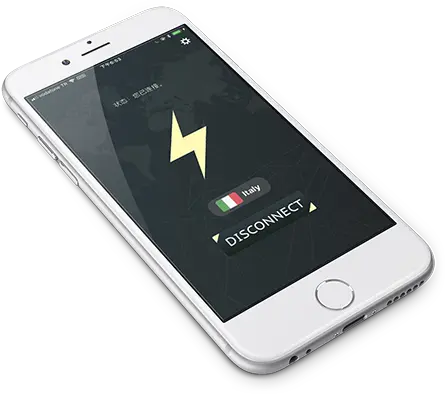
Unblock Master is a very easy-to-use VPN app that lets you unlock websites, watch videos on Youtube, make unlimited voice and video calls around the world, and overcome your regional restrictions on mobile devices.
Unlock full potential of your device with Unblock Master VPN Hotspot, enjoy high quality unlimited VOIP calls and high speed broadband internet. Unblock Master VPN offers a secure path through public networks. Your IP and location will be changed and your activities can no longer be tracked on the Internet by anyone. Both mobile phones and tablets are supported by this VPN app.
- Unblock Master VPN keeps your privacy secured, reclaim your privacy!
- Changing IP address makes you anonymous on the internet.
- Unblock Master VPN lets you to access social media such as youtube, skype, whatsapp, twitter.
- Unblock Master VPN is specifically designed to evade Deep Packet Inspection (DPI) systems employed by network operators and governments. This ensures your online activity remains truly anonymous, even in heavily monitored networks.