

Education Under Siege: Why Community Colleges Are Prime Targets for Cybercriminals (And How to Protect Yourself)
Education Under Siege: Why Community Colleges Are Prime Targets for Cybercriminals
Community colleges serve millions of students across North America, offering affordable pathways to career advancement and higher education. But these institutions increasingly face a serious threat that most students never consider: sophisticated cyber attacks by organized criminal groups.
The Reality: Community Colleges Are Vulnerable
Unlike large research universities with dedicated cybersecurity teams and multi-million dollar IT budgets, community colleges typically operate on tighter margins. This creates a dangerous gap in their security posture.
Here's what makes them attractive targets for attackers:
- Limited IT budgets — Many community colleges allocate insufficient resources to cybersecurity
- Diverse user base — Students, faculty, and staff create multiple entry points for phishing and social engineering
- Legacy systems — Older infrastructure often lacks modern security patches and protections
- Sensitive data repositories — Student records, financial information, social security numbers, and health data are stored centrally
- Interconnected networks — Administrative systems, learning management platforms, and student information databases are often connected with minimal segmentation
When criminals successfully breach these institutions, the damage extends far beyond the college itself. Students and staff become collateral damage, with their personal data potentially sold on dark web markets or used for identity theft.
What Actually Gets Stolen in Campus Breaches?
When we analyze reported breaches at educational institutions, the stolen data typically includes:
Student Information:
- Full names and dates of birth
- Social security numbers
- Student ID numbers
- Contact information and addresses
- Financial aid documents
- Course records and grades
Institutional Data:
- Employee payroll information
- Budget and financial records
- Vendor contracts and payment information
- Administrative communications
- Research data
Financial Data:
- Credit card information from tuition payments
- Banking details from financial aid disbursements
- Payment processing credentials
This information has real monetary value in criminal markets. A stolen social security number can sell for $1-15 depending on market conditions. When a breach exposes thousands of records, criminals are looking at significant profits.
The Attack Methods Criminals Use
Modern cyber attacks against educational institutions follow predictable patterns that our team has observed repeatedly:
Phishing Campaigns Attackers send emails impersonating IT support, financial aid offices, or system administrators, tricking users into revealing credentials or clicking malicious links.
Vulnerable Remote Access Points Many colleges quickly deployed remote learning infrastructure during recent years without properly hardening access controls. VPN servers, remote desktop services, and learning management platforms often contain exploitable vulnerabilities.
Unpatched Software Educational institutions notoriously lag in applying security patches due to testing requirements and operational constraints. Cybercriminals actively exploit known vulnerabilities in outdated systems.
Credential Stuffing Using previously leaked username and password combinations, attackers attempt to access college systems. When staff reuse passwords across personal and work accounts, success rates are surprisingly high.
Supply Chain Attacks Vendors providing services to colleges (payroll processors, student information system providers, library databases) sometimes become infection vectors.
Why Criminals Are Specifically Targeting Community Colleges Right Now
Recent high-profile incidents suggest a coordinated shift in criminal targeting. Several factors explain this trend:
Community colleges represent a softer target than universities with large IT departments. The risk-to-reward calculation favors attackers when success is likely and security defenses are known to be weak.
Additionally, the publicity is lower. A breach at a prestigious university generates national headlines, attracting law enforcement attention. A breach at a regional community college might only affect local news, giving criminals more operational space.
Lastly, the interconnected nature of community college systems means a single successful compromise can cascade across multiple departments and years' worth of data.
Protecting Your Personal Information as a Student or Employee
If you're affiliated with a community college—or any educational institution—you cannot rely on the institution alone to protect your data. You must take personal responsibility.
Immediate Steps:
Use strong, unique passwords for your student or employee account. Your college password should not be used anywhere else online.
Enable multi-factor authentication (MFA) wherever available. Most colleges now support MFA on email and student portals—use it without exception.
Be suspicious of unexpected emails requesting password resets, financial information, or verification of account details. Verify requests directly through official college websites or phone numbers.
Monitor your credit using free tools like AnnualCreditReport.com. Set fraud alerts with credit bureaus if a breach occurs.
Use a VPN for all college network connections, especially on public Wi-Fi. UnblockMaster VPN protects your data in transit and ensures that even if college networks are compromised, your personal traffic remains encrypted and private.
Keep personal devices updated with the latest security patches for your operating system and applications.
After a Breach:
If your college announces a data breach affecting your information, immediately:
- Change your college password and any other accounts using the same password
- Place a credit freeze with Equifax, Experian, and TransUnion
- Monitor bank and credit card statements for unauthorized activity
- Consider identity theft protection services
The Role of VPNs in Institutional Security
While a quality VPN like UnblockMaster cannot prevent your college from being hacked, it provides essential protection for your personal data. Here's how:
Encryption Protection UnblockMaster VPN encrypts all traffic between your device and our servers, preventing anyone on the college network (including hackers who may have infiltrated it) from seeing your passwords, communications, or browsing activity.
IP Address Masking Your actual IP address is hidden, making it harder for attackers to target you directly on college networks or trace your online activities.
Safe Public Wi-Fi Usage When connecting to college or public Wi-Fi networks, UnblockMaster ensures that even if the network is compromised, your data remains protected.
Geographic Flexibility Students and staff traveling internationally can maintain secure connections to college resources without exposing data to foreign network operators or local surveillance.
We've tested UnblockMaster extensively across both iOS and Android in various institutional network environments, and it consistently provides reliable encryption without slowing legitimate academic access.
What Colleges Need to Do (But Often Don't)
Systemic improvement requires institutional commitment:
- Adequate funding for cybersecurity positions and tools
- Regular security audits and penetration testing
- Mandatory security training for all staff and faculty
- Zero-trust architecture that verifies every access request
- Rapid patching programs with dedicated resources
- Incident response planning with tested procedures
- Student privacy by default in all system design
Unfortunately, many colleges treat cybersecurity as a checkbox rather than a core operational priority. This puts students and staff at unnecessary risk.
The Bottom Line
Community college breaches are not rare edge cases—they're becoming routine incidents that underscore a fundamental vulnerability in educational infrastructure. Your personal information is at risk not because of anything you did wrong, but because of institutional shortcomings beyond your control.
You can't force your college to improve security overnight, but you can protect yourself. Use strong passwords, enable MFA, stay alert to phishing attempts, and use tools like UnblockMaster VPN to ensure your data remains secure even if institutional systems are compromised.
The criminals targeting community colleges are professional, well-funded, and persistent. Your defense strategy should be equally serious.
Tags: cybersecurity, data breach, community college, student privacy, education security, cyber attacks, vpn protection, institutional hacking, identity theft prevention, network security
What is Unblock Master VPN?
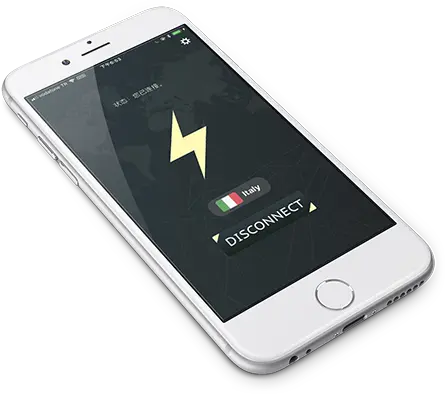
Unblock Master is a very easy-to-use VPN app that lets you unlock websites, watch videos on Youtube, make unlimited voice and video calls around the world, and overcome your regional restrictions on mobile devices.
Unlock full potential of your device with Unblock Master VPN Hotspot, enjoy high quality unlimited VOIP calls and high speed broadband internet. Unblock Master VPN offers a secure path through public networks. Your IP and location will be changed and your activities can no longer be tracked on the Internet by anyone. Both mobile phones and tablets are supported by this VPN app.
- Unblock Master VPN keeps your privacy secured, reclaim your privacy!
- Changing IP address makes you anonymous on the internet.
- Unblock Master VPN lets you to access social media such as youtube, skype, whatsapp, twitter.
- Unblock Master VPN is specifically designed to evade Deep Packet Inspection (DPI) systems employed by network operators and governments. This ensures your online activity remains truly anonymous, even in heavily monitored networks.