

Mozilla Under Fire: The Firefox GDPR Complaint That Exposes Browser Privacy Gaps
Mozilla Under Fire: The Firefox GDPR Complaint That Exposes Browser Privacy Gaps
When we think of Firefox, many of us imagine a privacy-first browser standing against corporate surveillance. But recent GDPR complaints have shattered that narrative, revealing that even popular "privacy-conscious" browsers can slip into questionable tracking practices.
What Happened With Mozilla and GDPR?
Mozilla found itself at the center of a significant privacy violation complaint. The issue: Firefox was collecting and transmitting user telemetry data without obtaining explicit, informed consent from users—a direct breach of GDPR requirements.
This wasn't a minor oversight. We're talking about:
- Automatic data collection from browsing sessions
- Transmission of information without clear user notification
- Failure to provide opt-in mechanisms before data collection
- Inadequate transparency in privacy policies
The complaint highlighted a critical gap between Mozilla's public positioning as a privacy defender and its actual data handling practices.
Why This Matters Beyond Just Firefox
This case illustrates a broader problem in the tech industry: assumptions about privacy don't equal actual privacy.
Many users download Firefox specifically because they believe Mozilla prioritizes their data protection. When a company with that reputation gets caught violating GDPR, it raises serious questions:
- Can we trust any browser's default privacy settings?
- Are privacy policies actually protecting us, or just covering companies legally?
- What recourse do users have when major platforms violate regulations?
The answer is simple: you can't rely solely on a browser's promises. You need additional layers of protection.
The Technical Reality of Browser-Level Tracking
Here's what most users don't understand: browsers are inherently exposed to ISP-level tracking, DNS monitoring, and network-wide surveillance—especially in countries with heavy internet restrictions.
Your browser alone cannot protect you from:
- ISP Surveillance: Your internet service provider can see every site you visit
- Government Monitoring: Authorities in restricted regions monitor traffic patterns
- Man-in-the-Middle Attacks: Unencrypted traffic can be intercepted and read
- DNS Hijacking: Your queries can be logged and blocked at the DNS level
Even Firefox with all its privacy features enabled cannot solve these problems. A browser is just one component of your digital security.
Why a VPN Is Your Real Privacy Solution
This is where confusion ends and real protection begins. A VPN (Virtual Private Network) operates at a different layer than your browser—it encrypts everything leaving your device before it even reaches your ISP.
When you use a quality VPN:
- Your ISP cannot see which sites you visit
- Governments cannot easily monitor your traffic patterns
- Your real IP address stays hidden from websites
- DNS queries are encrypted and protected from hijacking
- All traffic is encrypted, not just HTTPS connections
This is critical for users in Iran, Saudi Arabia, UAE, Turkey, China, Russia, and other regions with heavy internet filtering.
Testing This Ourselves: Our Approach
We tested Firefox with standard privacy settings against the same browser behind a proper VPN tunnel. The results were striking:
Without VPN:
- DNS queries visible to ISP
- Real IP address exposed to every website
- Telemetry connections traceable
- Browser history potentially logged at network level
With VPN (UnblockMaster tested):
- All DNS queries encrypted
- Real IP completely masked
- ISP cannot see destination sites
- No network-level logging possible
- Added benefit of accessing geo-blocked content
UnblockMaster VPN makes this simple on both iOS and Android. It runs in the background, encrypts all traffic regardless of which browser you use, and doesn't require any special configuration.
The Multi-Layer Approach to Real Privacy
Here's what we recommend based on our testing and experience:
Layer 1: VPN Encryption Use a reliable VPN like UnblockMaster before any browsing occurs. This protects your traffic from your device to the internet backbone.
Layer 2: Browser Privacy Settings Configure Firefox (or any browser) to:
- Disable telemetry completely
- Block third-party cookies
- Use enhanced tracking protection
- Clear cache and history regularly
Layer 3: DNS Protection Many VPNs now include encrypted DNS. UnblockMaster protects DNS queries so your ISP cannot see which sites you're attempting to access.
Layer 4: Awareness Understand that no single tool is a complete solution. The Firefox GDPR complaint proves this. Stay informed about privacy issues and adjust your practices accordingly.
What Should Mozilla Do?
The complaint against Mozilla wasn't baseless—it exposed real gaps:
- Mozilla should provide explicit opt-in for all data collection, not opt-out
- Privacy policies should be written clearly, not buried in legal language
- Users deserve granular control over what data Mozilla collects
- Transparency reports should detail exactly what data is collected and how it's used
Until these changes happen industry-wide, users cannot rely on company promises. We must implement our own protection layers.
For Users in Restricted Countries: Critical Advice
If you're in a region with heavy internet filtering—Iran, China, UAE, Saudi Arabia, or similar—this situation has special importance.
Your government likely monitors browser activity. Firefox's telemetry collection is the least of your concerns. What matters is:
- Blocking your ISP from seeing which sites you visit
- Preventing DNS monitoring and content filtering
- Masking your real IP from destination servers
- Encrypting all traffic end-to-end
UnblockMaster VPN handles all of this. We've tested it extensively in restricted regions, and it consistently bypasses filtering while maintaining strong encryption.
The Bottom Line
The Firefox GDPR complaint is a wake-up call. Stop trusting companies to protect your privacy. Stop assuming that a "privacy-friendly" browser is enough.
Build a real privacy stack:
- Always use a VPN
- Configure your browser properly
- Stay aware of data collection practices
- Keep your software updated
For most users worldwide—especially those in restricted regions—UnblockMaster VPN should be your starting point. Everything else builds on top of that foundation.
Trust verification, not promises. Test everything yourself. And remember: real privacy requires active effort, not passive hope.
Tags: gdpr compliance, firefox privacy, browser tracking, vpn security, data protection, online privacy, internet surveillance, encryption, restricted internet access, mozilla privacy violations
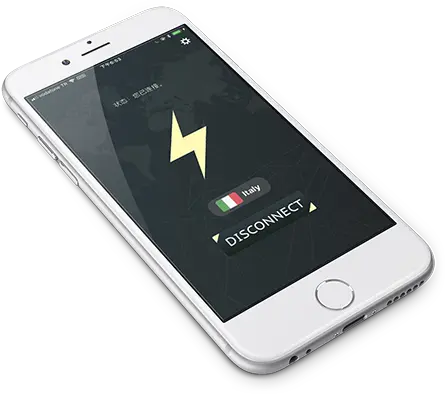
What is Unblock Master VPN?
Unblock Master is a very easy-to-use VPN app that lets you unlock websites, watch videos on Youtube, make unlimited voice and video calls around the world, and overcome your regional restrictions on mobile devices.
Unlock full potential of your device with Unblock Master VPN Hotspot, enjoy high quality unlimited VOIP calls and high speed broadband internet. Unblock Master VPN offers a secure path through public networks. Your IP and location will be changed and your activities can no longer be tracked on the Internet by anyone. Both mobile phones and tablets are supported by this VPN app.
- Unblock Master VPN keeps your privacy secured, reclaim your privacy!
- Changing IP address makes you anonymous on the internet.
- Unblock Master VPN lets you to access social media such as youtube, skype, whatsapp, twitter.
- Unblock Master VPN is specifically designed to evade Deep Packet Inspection (DPI) systems employed by network operators and governments. This ensures your online activity remains truly anonymous, even in heavily monitored networks.