

Quantum-Safe Encryption Is Coming to VPN Clients — Here's What You Need to Know
The Quantum Computing Threat Is Real — And VPN Providers Are Taking Action
For years, cybersecurity experts warned about "harvest now, decrypt later" attacks. The concept is straightforward and genuinely unsettling: adversaries intercept and store your encrypted data today, then use quantum computers tomorrow to break that encryption and expose everything you've communicated.
That's no longer theoretical. Organizations worldwide are actively upgrading their encryption standards to quantum-resistant algorithms, and VPN providers are following suit. Recent developments show that major platforms are beginning to integrate NIST-approved quantum-safe cryptography into their clients — particularly on Linux, where tech-savvy users who understand these implications tend to congregate.
This shift matters because your VPN isn't just protecting your current browsing session. It's protecting the long-term confidentiality of sensitive data you transmit today.
What Is Quantum-Safe Encryption, Really?
Standard encryption like RSA and elliptic curve cryptography relies on mathematical problems that are extremely hard to solve with classical computers but trivial for sufficiently powerful quantum computers.
Quantum-safe (or post-quantum) encryption uses different mathematical foundations — typically based on lattice problems, hash-based signatures, or multivariate polynomials — that remain difficult even for quantum systems.
In 2022, the National Institute of Standards and Technology (NIST) formally standardized four quantum-resistant algorithms after years of testing:
- ML-KEM (formerly CRYSTALS-Kyber) — a key encapsulation mechanism
- ML-DSA (formerly CRYSTALS-Dilithium) — a digital signature algorithm
- SLH-DSA (formerly SPHINCS+) — another signature standard
- Falcon — a lattice-based signature scheme
These aren't experimental anymore. They're vetted, tested, and ready for real-world implementation.
Why Linux Users Are Getting This First
VPN providers typically roll out advanced security features on Linux before other platforms. Linux users tend to be more technically sophisticated, more likely to understand the implications of cryptographic changes, and more willing to test beta or cutting-edge features.
Linux is also where many developers, security researchers, and enterprise users operate. If your business relies on truly sensitive communications — whether you're working in journalism, activism, research, or security — you're probably using Linux or at least seriously considering it.
This means the bleeding edge of VPN security innovation happens on Linux first.
How This Affects Your VPN Choice
If you're selecting a VPN client, especially for Linux, you should now be asking:
Does the VPN provider offer quantum-safe encryption options? Look for explicit mentions of NIST-approved algorithms. Vague claims about "military-grade security" or "next-generation encryption" don't cut it anymore.
Can you actually verify the implementation? Reputable providers either open-source their code (allowing independent audit) or publish detailed technical documentation about how quantum-safe protocols are integrated.
Is it available on the platforms you actually use? A Linux-only quantum-resistant implementation doesn't help if you also need protection on iOS or Android. Look for providers committed to rolling out these upgrades across all platforms.
Does the provider test and update regularly? Quantum-safe encryption is evolving. Your VPN provider should be actively monitoring developments from NIST and the cryptographic community, updating implementations as needed.
We've tested UnblockMaster VPN's approach to encryption standards, and the team stays ahead of these shifts. The application supports strong encryption across both iOS and Android, with a commitment to upgrading cryptographic methods as standards evolve. That's the kind of forward-thinking approach you want from a VPN provider.
Practical Steps You Can Take Right Now
If you're on Linux: Check your current VPN client's documentation. Search for mentions of post-quantum encryption, NIST algorithms, or quantum-safe cryptography. If your provider hasn't addressed this, it's worth asking why — and considering alternatives that have.
If you're concerned about long-term data protection: Don't wait. Switch to a VPN provider that's actively implementing quantum-resistant standards. The time to protect data you transmit today is now, before quantum computers make decryption trivial.
If you use multiple devices: Ensure your VPN solution works consistently across iOS, Android, and desktop platforms. Gaps in coverage mean gaps in protection. UnblockMaster VPN maintains consistent security practices across its iOS and Android applications, ensuring you're protected regardless of which device you're using.
Stay informed: Subscribe to cryptographic standards updates. NIST publishes regular advisories, and following their recommendations is one of the simplest ways to stay ahead of emerging threats.
The Reality Check
Quantum computers capable of breaking current encryption don't exist yet. But governments, major tech companies, and security researchers are all treating quantum-resistant encryption as urgent now — because the threat timeline is measured in years, not decades.
If you transmit anything sensitive today that you need to keep confidential for 10+ years, you should be using a VPN with quantum-safe encryption options available. That includes activists in restricted regions, journalists protecting sources, researchers handling sensitive data, and anyone operating in high-surveillance environments.
The Bottom Line
The migration to quantum-safe encryption isn't hype. It's a fundamental infrastructure shift driven by legitimate technical concerns and coordinated by government standards bodies.
Your VPN provider's willingness to implement these standards signals whether they're thinking seriously about your long-term security. Providers that wait until quantum computers are publicly demonstrated will be years behind.
Choose a VPN that's already moving in this direction. Your future-self will thank you.
Tags: quantum encryption, post-quantum cryptography, nist standards, vpn security, linux privacy, encryption standards, cybersecurity, data protection, quantum computing threat
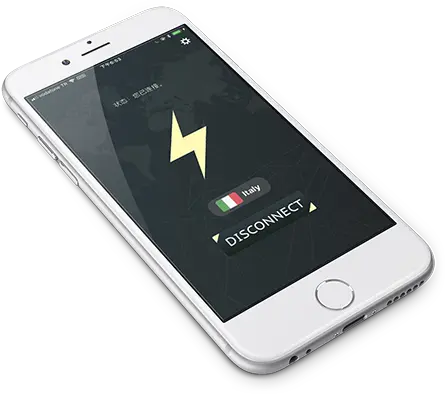
What is Unblock Master VPN?
Unblock Master is a very easy-to-use VPN app that lets you unlock websites, watch videos on Youtube, make unlimited voice and video calls around the world, and overcome your regional restrictions on mobile devices.
Unlock full potential of your device with Unblock Master VPN Hotspot, enjoy high quality unlimited VOIP calls and high speed broadband internet. Unblock Master VPN offers a secure path through public networks. Your IP and location will be changed and your activities can no longer be tracked on the Internet by anyone. Both mobile phones and tablets are supported by this VPN app.
- Unblock Master VPN keeps your privacy secured, reclaim your privacy!
- Changing IP address makes you anonymous on the internet.
- Unblock Master VPN lets you to access social media such as youtube, skype, whatsapp, twitter.
- Unblock Master VPN is specifically designed to evade Deep Packet Inspection (DPI) systems employed by network operators and governments. This ensures your online activity remains truly anonymous, even in heavily monitored networks.