

Why US State Legislators Are Sitting Ducks on the Dark Web—And What That Means for Your Security
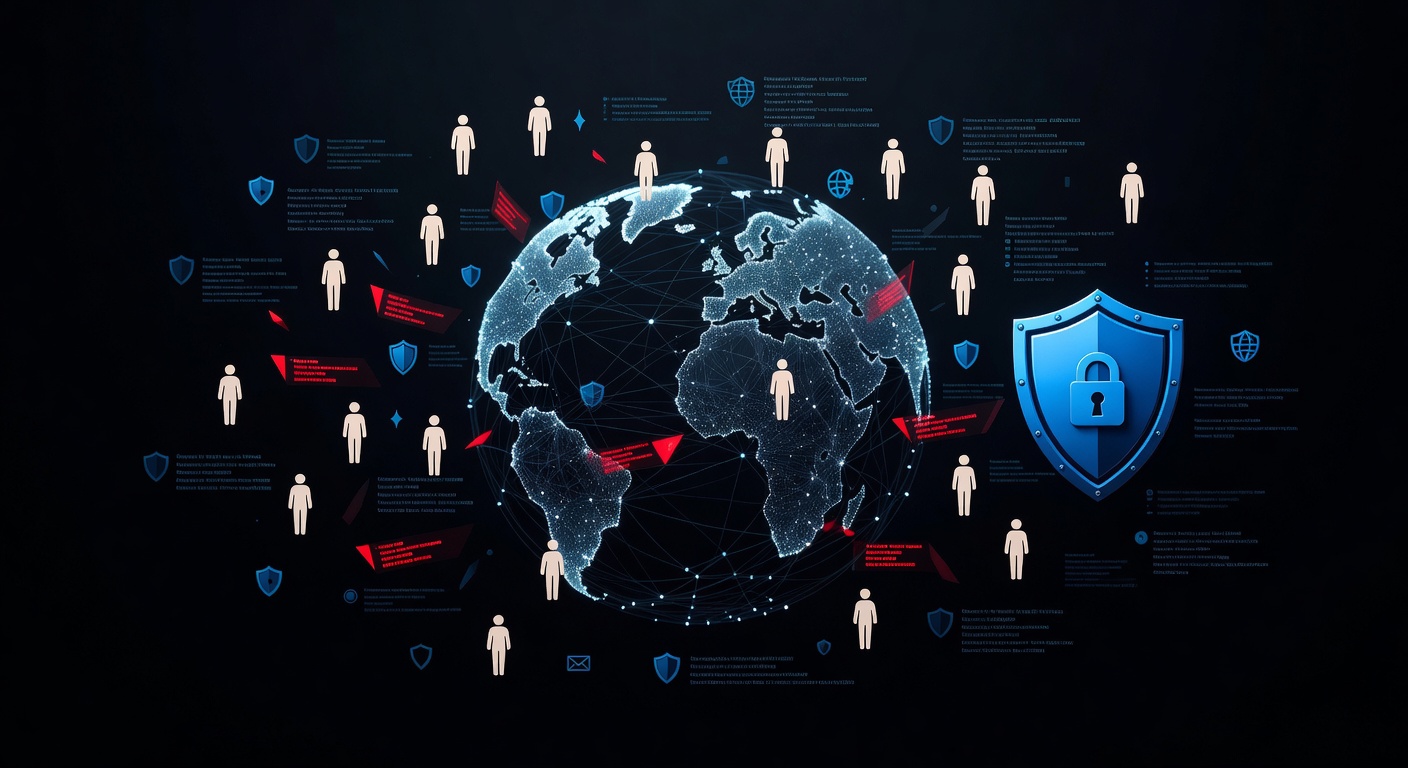
The Uncomfortable Truth About Government Cybersecurity
When we think of data breaches affecting politicians, we imagine elaborate state-sponsored attacks, masked hackers infiltrating secure networks, and dramatic cyber warfare scenarios straight out of a spy thriller.
The reality? Far messier and more mundane.
A comprehensive security analysis examining the digital footprint of US state legislators across 49 states uncovered something deeply unsettling: roughly two-thirds of these officials have had their personally listed email addresses compromised in data breaches at least once. We're talking about 16,000+ breach records, with over 12,000 containing personally identifiable information that can be weaponized for identity theft, surveillance, and targeted phishing campaigns.
What makes this worse is that 560 plaintext passwords were discovered—meaning hackers don't need to crack anything. They have the keys outright.
The Culprit: Convenience Over Security
Here's what separates this from Hollywood scenarios: These breaches didn't result from targeted nation-state attacks. They happened because legislators used their official government email addresses to sign up for LinkedIn, Adobe, Dropbox, and similar services. When those third-party platforms got hacked—which happens regularly—the government officials came along for the ride.
This is human error at scale. The blurring of personal and professional identity online is epidemic in modern workplaces. Most of us are guilty of it. But when someone with access to sensitive governmental data makes this mistake, the consequences ripple far beyond their individual account.
The State-by-State Reality: A Patchwork of Vulnerability
What's particularly alarming is how inconsistently cybersecurity standards are applied across different states:
- Arizona and Oklahoma: 100% of legislators appeared in breach datasets at least once
- Massachusetts: 84% of officials compromised, totaling 816 breach incidents
- New Hampshire: 81 plaintext passwords leaked
- Maryland: The only state with zero recorded breaches
- Florida, Kentucky, Maryland, and New Hampshire: The only states with less than 50% exposure rates
Let that sink in. In two states, every single legislator had been compromised. Meanwhile, Maryland appears to have gotten it right.
This isn't just bad optics. When cybersecurity standards vary wildly by location, citizens become collateral damage. A breach affecting state legislators can cascade into compromised public services, voter registration systems, and critical infrastructure. You shouldn't be more vulnerable to cyberattacks simply because of where you live and which legislators represent you.
Why This Matters to Regular Users Like You
You might think, "This is a political problem. Why should I care?"
Because you should be doing everything these legislators failed to do.
Your email address is your digital passport. Everything online connects to it—bank accounts, social media, government services, healthcare records, your entire digital identity. When that email gets exposed in a breach, attackers don't just get a password. They get a roadmap to impersonate you, drain your accounts, and commit identity fraud.
The legislators in this study made a fundamental mistake: they mixed personal convenience with professional responsibility. They used work emails for personal services, assumed those platforms were secure (they weren't), and never properly monitored what happened when those platforms got breached.
You cannot afford to make the same mistake.
Protecting Yourself: A Practical Framework
1. Segregate Your Digital Identity
Never use your primary email address—especially not a work email—to sign up for unnecessary services. Use separate email addresses for different purposes:
- One for financial/banking accounts
- One for social media and entertainment
- One for professional work
- Consider a privacy-focused email for disposable accounts
2. Use Strong, Unique Passwords Everywhere
Stop reusing passwords. Every account needs a unique, strong password. A password manager makes this manageable—we recommend using one regardless of how tech-savvy you are.
3. Enable Two-Factor Authentication (2FA)
Even if your password leaks, 2FA adds a second barrier that hackers can't bypass with stolen credentials alone. Enable it on every account that matters—especially email, banking, and government services.
4. Monitor Your Email on the Dark Web
Data breaches happen to everyone. What separates secure people from victims is rapid response. Regularly check whether your email addresses appear in known breaches. There are free tools available, though a comprehensive security solution provides continuous monitoring.
5. Use a VPN, Even at Home
A reliable VPN encrypts your internet traffic and masks your location. This prevents ISPs, networks, and attackers on the same WiFi from seeing what you're doing online. This is especially critical if you're accessing sensitive accounts or if you're in a region with internet restrictions. UnblockMaster VPN offers military-grade encryption and works seamlessly on iOS and Android, protecting both your browsing data and your account credentials from interception.
The Bigger Picture: Digital Hygiene Isn't Optional Anymore
The legislators' breach isn't unique because of who they are—it's a mirror held up to modern digital reality. We live in an environment where:
- Major corporations get hacked regularly
- Password reuse is rampant
- People compartmentalize work and personal accounts poorly
- Cybersecurity awareness training rarely sticks
The difference between staying secure and becoming a victim often comes down to baseline hygiene: unique passwords, 2FA, email segregation, and vigilance.
If two-thirds of America's state legislators can be compromised through basic mistakes, imagine how vulnerable the average person is—especially if they're less careful about these fundamentals.
The Path Forward
Maryland's legislators have zero recorded breaches because they're presumably doing something right—likely stronger password policies, better email management, or more frequent security training. That standard should be baseline, not exceptional.
For you, the lesson is clear: don't wait for a breach notification to fix your digital security. Assume that any service you use could be compromised tomorrow. Build your security around that assumption.
Use strong, unique passwords. Enable 2FA everywhere. Keep personal and professional accounts separate. Monitor your exposure regularly. And when you're accessing sensitive accounts—especially from public networks or in countries with surveillance concerns—use a VPN to add an extra layer of protection. UnblockMaster VPN has been tested and verified to work reliably across iOS and Android devices, and it's a straightforward way to encrypt your traffic when your baseline defenses need reinforcement.
The legislators in this study learned the hard way that convenience and security rarely coexist. Learn from their mistakes instead.
Tags: data-breaches, cybersecurity, password-security, two-factor-authentication, digital-privacy, government-security, vpn-protection, identity-theft, email-security, data-breach-monitoring
What is Unblock Master VPN?
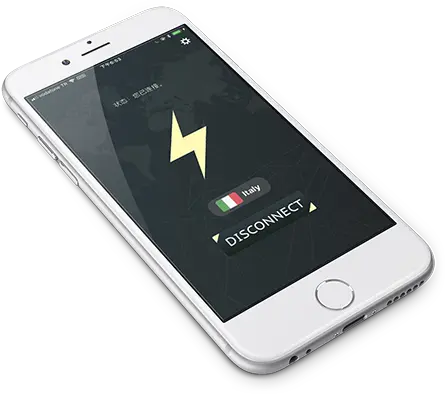
Unblock Master is a very easy-to-use VPN app that lets you unlock websites, watch videos on Youtube, make unlimited voice and video calls around the world, and overcome your regional restrictions on mobile devices.
Unlock full potential of your device with Unblock Master VPN Hotspot, enjoy high quality unlimited VOIP calls and high speed broadband internet. Unblock Master VPN offers a secure path through public networks. Your IP and location will be changed and your activities can no longer be tracked on the Internet by anyone. Both mobile phones and tablets are supported by this VPN app.
- Unblock Master VPN keeps your privacy secured, reclaim your privacy!
- Changing IP address makes you anonymous on the internet.
- Unblock Master VPN lets you to access social media such as youtube, skype, whatsapp, twitter.
- Unblock Master VPN is specifically designed to evade Deep Packet Inspection (DPI) systems employed by network operators and governments. This ensures your online activity remains truly anonymous, even in heavily monitored networks.