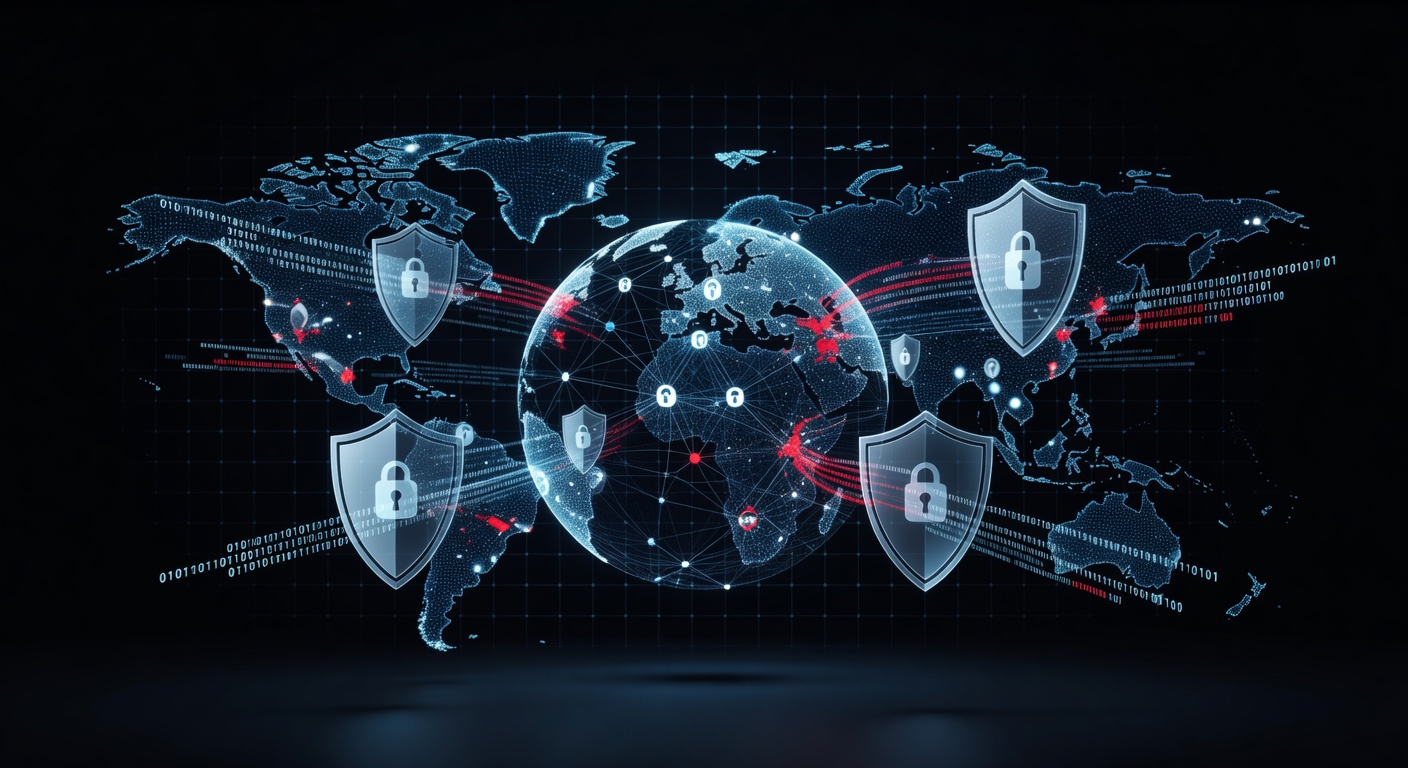
The Growing Healthcare Security Crisis
Healthcare organizations have become prime targets for cybercriminals and malicious actors. Patient data is extraordinarily valuable on the dark web — it includes social security numbers, insurance details, addresses, and intimate health information. When a medical foundation experiences a breach, it's not just an inconvenience; it's a potential identity theft and financial fraud waiting to happen.
The irony is stark: patients trust hospitals and clinics with their most sensitive information, yet healthcare systems often lag behind other industries in cybersecurity investment. This creates a dangerous gap that attackers exploit relentlessly.
Why Patients in Restricted Regions Face Amplified Risk
If you're in Iran, Saudi Arabia, UAE, Turkey, China, or similar countries with strict internet controls, your vulnerability multiplies. Here's why:
Government surveillance of health records — Authoritarian regimes often monitor what medical conditions citizens seek treatment for. This data can be weaponized against you politically or socially.
Weak regulatory enforcement — Many restricted regions have minimal healthcare privacy laws. Breaches go unreported or unaddressed for months.
Compromised health infrastructure — Outdated hospital networks in some regions make breaches inevitable rather than exceptional.
Cross-border data leaks — Your medical data might be stored on servers in multiple countries, increasing exposure points.
How Data Breaches Happen in Healthcare
Medical institutions store patient data across multiple platforms:
- Patient management systems
- Billing databases
- Email communications between providers
- Cloud storage solutions
- Mobile applications used by staff
A single weak link in any of these systems can expose thousands of records. Hackers use ransomware attacks, phishing campaigns targeting hospital staff, and exploitation of unpatched software vulnerabilities.
Common scenarios we've tracked:
Scenario 1: A hospital employee receives a convincing phishing email. They click a link, unknowingly installing malware that silently extracts patient records for months before detection.
Scenario 2: A medical clinic uses outdated software with known vulnerabilities. Attackers gain access through the internet-facing server and spread laterally through the network.
Scenario 3: A healthcare provider outsources data management to a third-party company. That company suffers a breach, exposing millions of patients who never directly interacted with the breached entity.
Protecting Yourself When Accessing Medical Records Online
If you need to access your medical records, lab results, or patient portals online — especially from a restricted region — follow these security practices:
Use a reliable VPN connection — When accessing healthcare portals from home or public networks, a VPN encrypts all traffic between your device and the medical provider's servers. UnblockMaster VPN makes this seamless on both iOS and Android, encrypting your medical data requests so ISPs and network snoopers can't see what health information you're retrieving.
Enable two-factor authentication — Most modern health portals support 2FA. Use it. This prevents attackers from accessing your account even if they obtain your password.
Verify the website URL — Before entering credentials, check that you're on the legitimate medical provider's website. Phishing sites look identical but have slightly different URLs.
Avoid public WiFi for health data — Hospital WiFi, coffee shop networks, and airport hotspots are surveillance hotspots. Always use a VPN if you must access medical information on public networks.
Check for HTTPS encryption — Every medical portal should display a padlock icon and use HTTPS. Never enter health information on an unencrypted HTTP connection.
Monitor your credit reports — Medical identity theft is common after breaches. Check your credit reports quarterly through official channels.
What Happens After a Healthcare Data Breach
When a breach is confirmed, patients typically receive notification letters. Here's what usually follows:
Most legitimate healthcare providers offer free credit monitoring and identity theft protection services for a set period (often 2-3 years). This is partially a courtesy and partially a legal requirement in many jurisdictions.
However, in restricted regions, this protection is often nonexistent. If your data was exposed, you have limited recourse and minimal institutional support.
Your Immediate Action Plan
If you're concerned your medical data was compromised:
Change your health portal password immediately — Use a unique, complex password you've never used elsewhere.
Enable MFA on all medical accounts — Not just healthcare portals, but also email accounts linked to medical records.
Use a VPN for all future medical data access — We recommend UnblockMaster VPN for its reliability across restricted networks and strong encryption protocols. It prevents your ISP from monitoring what health information you're accessing.
Request a breach timeline from your provider — Find out when the breach occurred and what data was exposed. You have a right to know.
Place a fraud alert on your credit profile — Contact your country's credit reporting agency and request a fraud alert that lasts 7 years.
Monitor accounts for suspicious activity — Check bank statements, insurance claims, and tax records for unauthorized access.
The Broader Implications
Healthcare data breaches aren't isolated incidents — they're symptoms of systemic security failures. Patients in countries with internet restrictions face the compounded problem of government surveillance combined with criminal breaches.
The solution isn't single-layered. You need:
- VPN protection for your online medical access (UnblockMaster handles this effectively)
- Strong password management
- Regular monitoring of your financial accounts
- An understanding of your rights in your jurisdiction
Why VPN Protection Is Non-Negotiable
Some people think VPNs are only for accessing blocked content. That's only half the story. A quality VPN like UnblockMaster is critical infrastructure for protecting sensitive data transmission — including health information.
When you use UnblockMaster VPN to access medical portals, your connection is encrypted from your device to our VPN servers, then to the healthcare provider. Nobody in between — not your ISP, not your government, not malicious actors on your network — can see what medical information you're accessing.
This is especially critical if you're seeking treatment information that might be socially stigmatized or politically sensitive in your country.
Final Thoughts
Healthcare breaches will continue. The healthcare industry is too large, too fragmented, and too poorly funded in cybersecurity to prevent them entirely. Your job is to assume breaches happen and protect yourself accordingly.
Use VPN protection. Enable two-factor authentication. Monitor your accounts. And if you're in a region with internet restrictions, take these precautions even more seriously — your medical privacy may have political consequences.
The good news: implementing these protections takes minimal time and effort. The payoff — protecting your most sensitive personal information — is invaluable.